Loading...
Building new or replacing a failing foundation? We install concrete foundations in Pomona with proper clay soil prep, California seismic reinforcement, and full city permit handling.
Foundation installation in Pomona means building the concrete base that transfers your structure's full weight into the ground - most standard residential installations take three to five days of active construction, not counting one to three weeks for the City of Pomona permit process and roughly 28 days of curing time before framing can begin.
The two factors that shape every foundation project in Pomona are the clay soils and the seismic zone. Clay soil swells when it absorbs water and shrinks when it dries, which means subgrade compaction and proper drainage are not optional steps - they are why the foundation stays level over time. The seismic requirements mean more steel reinforcement inside the concrete and deeper footings around the perimeter. Both add cost compared to lower-risk areas, and both are non-negotiable on a permitted Pomona project.
For homeowners who need a standalone slab for an addition or ADU rather than a full structural foundation, our slab foundation building service covers that focused scope with the same permitted, inspected process.
Cracks running diagonally from the corners of door frames or window openings often mean the foundation beneath is moving unevenly. In Pomona, this pattern is especially common in older homes built on clay-heavy soil, where the ground expands and contracts with the seasons. A crack you can fit a quarter into is worth having looked at.
When a foundation shifts, the frame of the house shifts with it - and that shows up first in doors and windows that suddenly feel stiff or will not latch. In Pomona's dry climate, if your doors are sticking and the weather has not changed, the problem is more likely below the floor than in the air. This is one of the most common early warning signs homeowners overlook.
Hairline cracks in concrete are normal as it ages, but cracks that are wide, uneven, or growing over time are a different story. If one side of a crack is higher than the other - meaning the slab has shifted vertically - the ground beneath is moving in a way that needs attention. Walk your garage floor and exposed concrete areas and look for this step pattern.
Pomona gets most of its rainfall between November and March, and if water consistently pools against your foundation after a storm, it is working into the concrete over time. Moisture is one of the main causes of foundation deterioration, especially in older homes where drainage was not designed to current standards. Standing water within a foot or two of exterior walls after rain is worth a professional look.
We install foundations for new residential construction, room additions, accessory dwelling units, garages, and commercial structures across Pomona. Every project starts with a site assessment that evaluates soil conditions, lot slope, utility locations, and access before a single number is quoted. We handle the City of Pomona permit application, schedule city inspections at every required stage, and provide a written schedule before work begins. For properties where a standalone slab rather than a full structural foundation fits the scope, our slab foundation building team handles those projects at the appropriate scale.
We also handle foundation replacement on older Pomona properties where the existing concrete has failed - typically due to clay soil movement, inadequate original reinforcement, or poor drainage design. Replacement work begins with understanding why the original failed, so the new foundation does not repeat the same problem. For properties requiring large-scale concrete hardscape beyond the foundation itself, our concrete parking lot building team can extend that same soil-prep discipline to adjacent paved areas.
Built to current seismic and soil requirements for new homes, ADUs, and major additions in Pomona.
Right for older Pomona properties where failing concrete or inadequate reinforcement needs a full replacement.
Suited for small commercial structures, mixed-use lots, and multi-unit residential projects requiring permitted foundation work.
The Inland Empire's expansive clay soils and seismic activity are not generic considerations - they are the two most important factors in every Pomona foundation project. National pricing guides and contractor templates built for sandy or rocky ground underestimate how much preparation Pomona soil requires. A wet winter followed by a dry summer puts more stress on a foundation here than most regions experience in a decade. Add the California seismic reinforcement requirements, and you have a project type where the quality of execution matters more than almost anywhere else in the country.
A significant portion of Pomona's housing stock was built between the 1940s and 1970s, and older lots often hide complications - utility lines, tree roots, buried debris from previous demolitions - that add time and cost once excavation begins. We serve homeowners across the broader area, including Moreno Valley where Inland Empire soil conditions present similar challenges, and Riverside where mixed-use development and older residential lots require the same thorough site assessment approach. A detailed site walk before any quote is finalized is not just good practice - it is how we avoid surprises that cost you money mid-project.
We respond within 1 business day to schedule a free site visit. Foundation pricing depends on lot slope, soil conditions, and existing site features - a quote from a phone description alone is not accurate. Most site visits take 30 to 60 minutes and include a soil and access assessment.
After the site visit you receive a written estimate breaking out excavation, forming, reinforcement, concrete, and permit fees separately. We then submit the permit application to the City of Pomona Building and Safety Division - plan for one to three weeks for approval before any work begins.
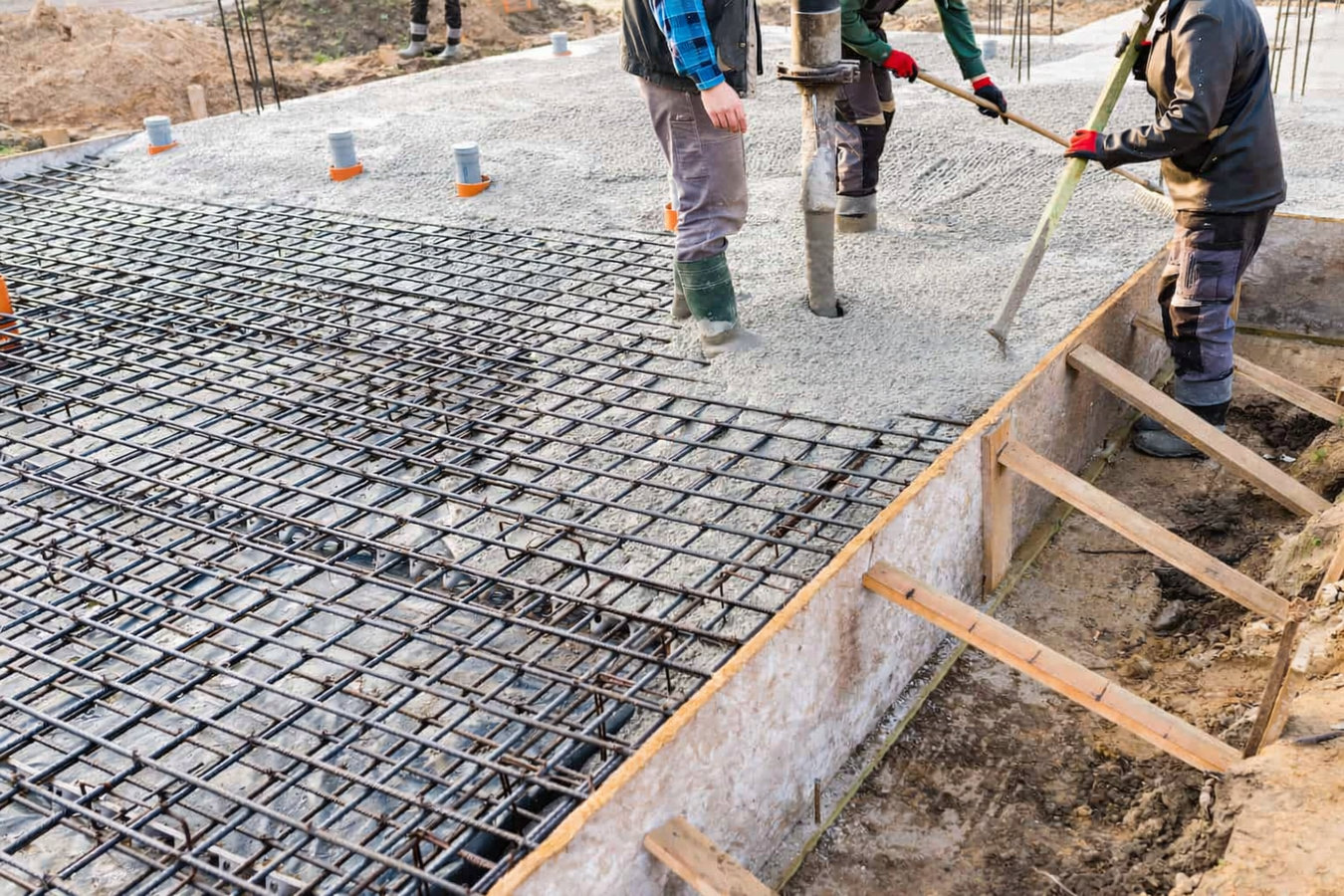
Once permitted, the crew excavates to the required depth, compacts the subgrade, and builds the formwork. Steel reinforcement is placed inside the forms and a city inspector visits before the pour to verify compliance. In Pomona, the clay-heavy soil means this stage often takes longer than homeowners expect.
The pour typically takes a single day. During summer months we schedule early-morning starts and keep the curing slab moist to prevent surface cracking in Pomona's heat. The slab needs at least a week before any construction above it, and about 28 days to reach full strength. A final city inspection closes the permit and you receive a copy of the signed record.
No obligation, no pressure. We visit your property, assess the soil, and give you a written quote with every cost broken out. We respond within 1 business day.
(909) 868-1669We hold a current California Contractors State License Board C-8 Concrete Contractor license. Visit cslb.ca.gov, enter our license number, and confirm it is active and clear of complaints before you hire us - or any contractor. Full liability and workers' compensation coverage is maintained throughout every project.
We have pulled permits with the City of Pomona Building and Safety Division on foundation projects across the city's neighborhoods. We handle the application paperwork, schedule every required city inspection, and hand you the signed permit record when the job is complete - so the permit process never stalls your project.
We install foundations on residential and mixed-use properties throughout the Pomona area and the surrounding 12 cities we serve. That local footprint means we know the access challenges, soil conditions, and permit office expectations you will encounter on a Pomona foundation project.
Pomona is in a seismically active part of Southern California, and California's building code requires denser reinforcement and deeper footings than lower-risk regions. We build to those standards on every foundation pour - and the American Society of Concrete Contractors' guidelines for reinforcement placement inform our field practice. These requirements are not an upsell; they are simply how foundations should be built here.
Every credential above exists to protect you from the most common ways foundation projects go wrong in this area - unpermitted work, rushed curing in summer heat, and soil prep that ignores local clay conditions. The California Geological Survey publishes the soil and seismic data that informs how foundations must be built across the Pomona Valley - and we reference that data in our site assessments.
Foundation permit requirements are administered by the City of Pomona Building and Safety Division. Concrete industry standards for structural foundations are set by the American Concrete Institute.
Concrete parking lots and hardstands built on properly prepared subgrade - the same soil prep discipline that applies to foundation work on a larger scale.
Learn moreSlab-on-grade foundations for additions, ADUs, and garages - a focused scope when a full structural foundation is not required.
Learn moreOur calendar fills up fast in spring - lock in your start date before the summer heat sets in. Free written estimate, permit timeline explained upfront, no surprises once work begins.