Loading...
Sunken driveway, settled garage floor, or uneven patio? We raise sunken slabs in Pomona without tearing out the concrete - faster and far less expensive than full replacement.
Foundation raising in Pomona lifts a sunken or uneven concrete slab back to its original height by pumping material underneath it through small drilled holes - most residential jobs on a single slab, such as a garage floor, porch, or driveway section, are completed in a few hours and the surface can be walked on the same day.
The reason slabs sink in Pomona is almost always the same: clay-heavy soils that swell with winter rain and shrink back during the dry summer, gradually pulling support away from the concrete above. Older homes built in the 1940s through 1970s are especially common candidates because the original soil compaction under those slabs was less thorough than today's standards. Foundation raising is cost-effective when the concrete itself is structurally sound - it saves you from the disruption and expense of tearing out a slab that simply dropped.
If a slab assessment reveals that the concrete is too far deteriorated to raise, our slab foundation building service covers full replacement pours - built to current seismic and soil preparation standards from the ground up.
If a door that used to swing freely now drags on the floor, or a window that opened easily now jams, the frame around it may have shifted. This often happens when the slab or foundation beneath that part of the house has dropped even slightly. In Pomona's older homes, this kind of shift tends to show up first in interior doorways near the garage or at the back of the house.
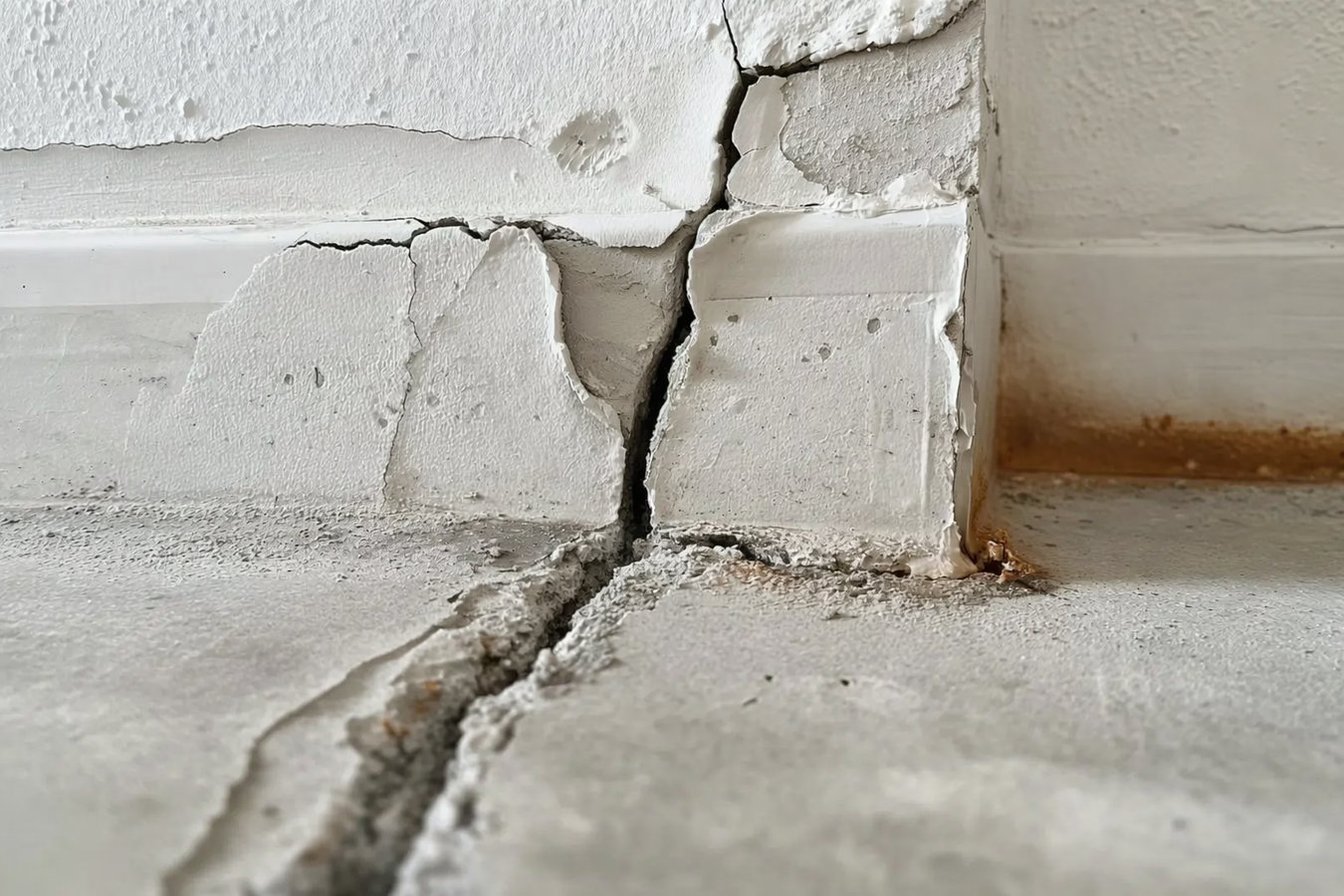
If you notice new cracks - or existing ones getting wider - in the weeks after Pomona's rainy season, that is a sign the clay soil underneath has been moving. Cracks wider than a quarter-inch, or cracks where one side sits higher than the other, deserve a closer look from a contractor. Small hairline cracks are normal, but stepped or offset cracks are not.
Kneel down and press on different sections of your garage floor or patio. If part of it flexes, rocks, or sounds hollow when you tap it, there is a void forming underneath. That void means the soil has pulled away from the concrete - and the slab is now unsupported. Left alone, it will crack under normal use, especially in an active household.
If rainwater collects against your home's foundation or along the edge of your driveway instead of draining away, the concrete has likely settled and created a low spot. In Pomona, where winter storms can drop significant rain in a short period, standing water near the foundation accelerates the soil erosion that causes further sinking - making this both a sign of a problem and a cause of a larger one.
We lift sunken slabs on driveways, garage floors, patios, front porches, pool decks, and interior slabs throughout Pomona using two proven methods: mudjacking, which pumps a cement-and-soil slurry beneath the slab, and polyurethane foam injection, which uses a lighter-weight expanding foam that cures faster and exerts less pressure on the soil below. Before recommending either method we assess the slab condition, measure how far it has dropped, and check for drainage or plumbing issues that could cause it to sink again. For projects where concrete also needs to be removed or cut as part of a repair, our concrete cutting service can be coordinated as part of the same project.
We also assess situations where raising is not the right answer. If the slab is badly cracked, broken into multiple sections, or deteriorated at the edges, we will tell you that directly and explain what a replacement would involve. For homeowners whose needs go beyond a single slab - for example, a full structural foundation for a major addition or new construction - our slab foundation building team handles those larger projects under the same permitted process.
Best for large slabs where cost is the primary concern and the soil conditions support a heavier fill material.
Suits slabs where lightweight fill is important, curing speed matters, or access holes need to be minimal.
For cases where raising is not the right fix - we give you the straight answer and explain your replacement options.
Pomona sits in the eastern San Gabriel Valley on soils with a significant clay content. That clay expands when it absorbs water during the wet season and shrinks back as it dries through summer - a cycle that puts constant, repeated pressure on concrete slabs from below. Combine that with Pomona's proximity to several active fault zones in the greater Inland Empire region, and you get an environment where foundation movement is genuinely more common than in areas with more stable geology. A contractor working in Pomona needs to account for ongoing soil behavior, not just fix the immediate drop. Homeowners can verify any California concrete contractor's license before hiring at the California Contractors State License Board.
A large share of Pomona's homes were built between the 1940s and 1970s, when soil compaction standards were less rigorous. Those original slabs have been shifting for decades, and raising is often the most cost-effective way to extend the life of concrete that is otherwise still in good structural shape. We serve homeowners throughout the region, including Ontario where similar clay soil profiles create comparable slab movement patterns, and Rancho Cucamonga where hillside lots add drainage complexity to foundation work.
We reply within 1 business day to schedule a free on-site assessment. Slab raising pricing depends on the size of the problem, the soil conditions, and the method - a quote over the phone is not reliable. The visit takes about 30 minutes and covers the full slab, drainage around it, and any signs of a plumbing leak.
After walking the slab we tell you honestly whether raising is the right long-term fix or whether replacement makes more sense. You receive a written estimate that separates method, materials, and any permit costs. If your project scope triggers a permit requirement with the City of Pomona, we handle the application.
The crew marks the drill points, drills small holes at measured intervals, inserts the injection nozzle, and pumps in the lifting material. You will see the slab rise gradually - it is a controlled process. A standard residential slab takes a few hours from setup to cleanup, and you can stay home throughout.
Once the slab reaches the right level, each drill hole is patched with concrete. The patches are visible up close but blend in over time. For mudjacking, plan to stay off the area with vehicles for 24 hours. For foam, curing is much faster. We walk you through the results before we leave and stand behind the work.
Free written estimate, no obligation. We respond within 1 business day. We tell you upfront whether raising is the right fix or whether you need something else.
(909) 868-1669We hold a current California Contractors State License Board C-8 Concrete Contractor license. You can verify it yourself at cslb.ca.gov in under two minutes - check that it is active, bonded, and free of complaints before you hire anyone for this kind of structural work.
A trustworthy contractor assesses the cause of the sinking before recommending a fix. We check for active plumbing leaks, drainage problems, and soil conditions that would cause the slab to sink again. If a contractor skips the diagnosis and goes straight to pricing, that is a warning sign.
Pomona's expansive clay requires a different approach than the sandy soils common in coastal Southern California. We have worked on foundation raising projects across the city - from the older 1950s and 1960s streets near downtown to newer residential streets near Cal Poly Pomona - and understand what Pomona's seasonal wet-dry cycles do to concrete over time.
When your project requires a City of Pomona permit, we handle the application and keep you informed of the timeline. Permitted work means a city inspector signs off on the job, which protects you if you ever sell your home or need to file an insurance claim. We never suggest skipping the permit process to save time.
Foundation raising on clay soils requires a different approach than on stable ground - and Pomona's seasonal wet-dry cycle means the diagnosis before the job matters as much as the method used on the day. Concrete Foundations Association best practices guide how we evaluate each slab and choose between mudjacking and foam injection for every project.
Permit requirements for structural concrete work in Pomona are set by the City of Pomona Building and Safety Division. For information on soil movement and seismic hazards in the San Gabriel Valley, see the California Geological Survey.
Precision diamond-blade cuts to remove damaged slab sections or create openings for new utilities, doors, or drains.
Learn moreWhen raising is not enough - new slab construction for additions, ADUs, and replacement pours on Pomona lots.
Learn morePomona's winter rains put real pressure on clay soils - a slab that sank this past season will keep moving if nothing is done. Call now for a free written estimate and we will get you on the schedule.